
Saving Finn’s Weaver: Anchoring student-led conservation for species at risk
Updated: Jul 22, 2025
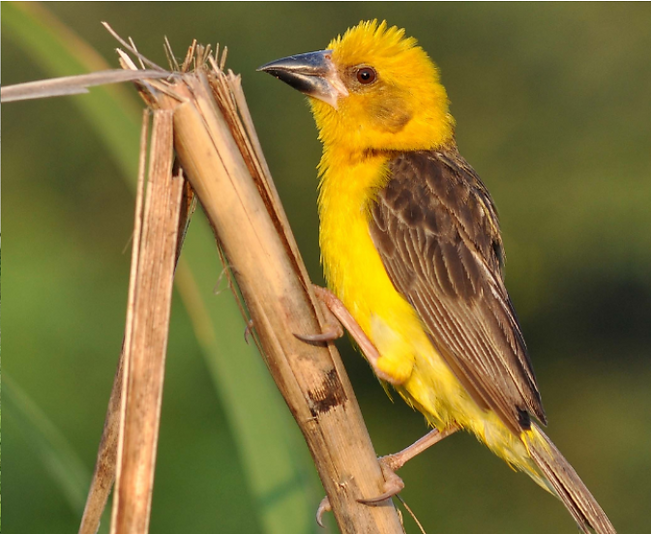
How many of us know of the birds in our backyard? Let alone, birds that might be highly endangered and hiding in plain sight.
At Nature Science Initiative (NSI), we have tried to address both these problems. Getting students to observe birds around them and bringing to their attention bird species in critical need of conservation.
The Finn's Weaver lies amongst the 4 species of weaver birds found in our state of Uttarakhand, located in the unique wetlands of its Terai region. Less than 1000 of its individuals remain worldwide, with very little known about its ecology and requirements. In Uttarakhand fewer than 50 pairs remain, where previously it was found abundantly across the Terai belts of Uttarakhand, UP, Nepal and Assam.
The Finn's has a unique relationship with the Terai wetlands where the Sarkhada grass found along these wetlands meets the Finn's specific nesting needs. Unlike it's more famous cousin the Baya weaver known for its polished nests, the Finn's tends to make more crude open & exposed nests hanging at the top of the Sarkhada grass reed making it more vulnerable to predation by other birds such as crows and crow pheasants.
Infact, for over a decade in Uttarakhand, there are no successful breeding records of Finn's weaver. Adding to the complexity, is that the reasons driving this bird to extinction, is still relatively unknown whether it's wetland encroachment by agriculture and industry, water pollution by sewage, plastics and pesticides or increased predation by crows.

NSI has been working with schools in the region for the past 2 years on the Wipro Earthian program and last year marked the very first time, school students were taken to see the elusive Finn's. We took Nanakmatta Public School (NPS) students, to see the bird at Haripura Dam in Gularbhoj - a wetland located just 60km from their school.
This started a series of conversations led by school students, on how to conserve endangered species such as Finn's weaver and also the super service-provider wetlands of the Terai region.
With this year marking another significant milestone, where along with NPS, other local schools participating in the Earthian program - including Little Scholars, Shining Star & GK Convent, too joined in to conserve the Finn's. All these schools, are in habitat of the Finn's weavers range distribution. GK Convent is located a few metres away from the last known breeding site of Finns Weaver at Haripura Reservoir. In another series of firsts, the schools participated in a joint level meeting with the Forest, Irrigation & Revenue departments organised by NSI to draw up a plan of action for Finn's conservation, with these students leading the way. Little Scholar's presented their findings on ground water depletion, causes of wetland degradation and their restoration requirements. Similarily, NPS students pressed on the need for engaging local communities surrounding the bird for its conservation.
It's also no coincidence both these schools did extremely well in the Earthian 2023 edition where NPS was selected in the Top 20 and Little Scholars in the Top 40 at the national level.

But more than the competition, it's the sense of stewardship and responsibility the students feel towards conservation and the scientific temperament they are building, which is heartening to see.
In fact, this July too, NSI along with the above mentioned schools, went to see the Finn's at Gularbhoj, where instead of experts at NSI showing students the birds, the students showed each other - collaboration in action and practice.
Yet, there are many challenges when it comes to the Finn's. Like this year too, we only saw the new nests made by the Finn's but no eggs or chicks could be seen. Similarly surveying the bird is a challenge, as it can be only easily identified in

its bright yellow breeding plumage during the monsoon, while the rest of the year, it passes off as an inconspicuous looking sparrow. Even where it is found remains a question, as inspite of the wetlands dwindling in numbers, still quite a few wetlands remain unsurveyed for Finn's weaver. The birds shy nature makes it even more harder to find. Our local school partners for Earthian are now on the lookout for Finn's sightings at different wetland habitats.
However, we cannot say with certainty whether we will be able to save the Finn's weaver and to what extent. But, what is surely certain that when children from local communities are exposed to their natural surroundings and with the right mentoring, they can bring about change on ground. They certainly have the ability to lead the way and make a strong case for conservation, which very few adults can.
Comments